GenAI Medical Imaging: Discover Game-Changing Google Tools
GenAI medical imaging represents a significant breakthrough in the healthcare sector, offering transformative technologies that enhance diagnostic capabilities, heighten patient care, and streamline clinical processes. Among the pioneers in this domain, Google has emerged as a key player, integrating advanced artificial intelligence (AI) into medical imaging. This article explores how Google’s healthcare AI tools are reshaping the landscape of medical imaging.
What is GenAI Medical Imaging?
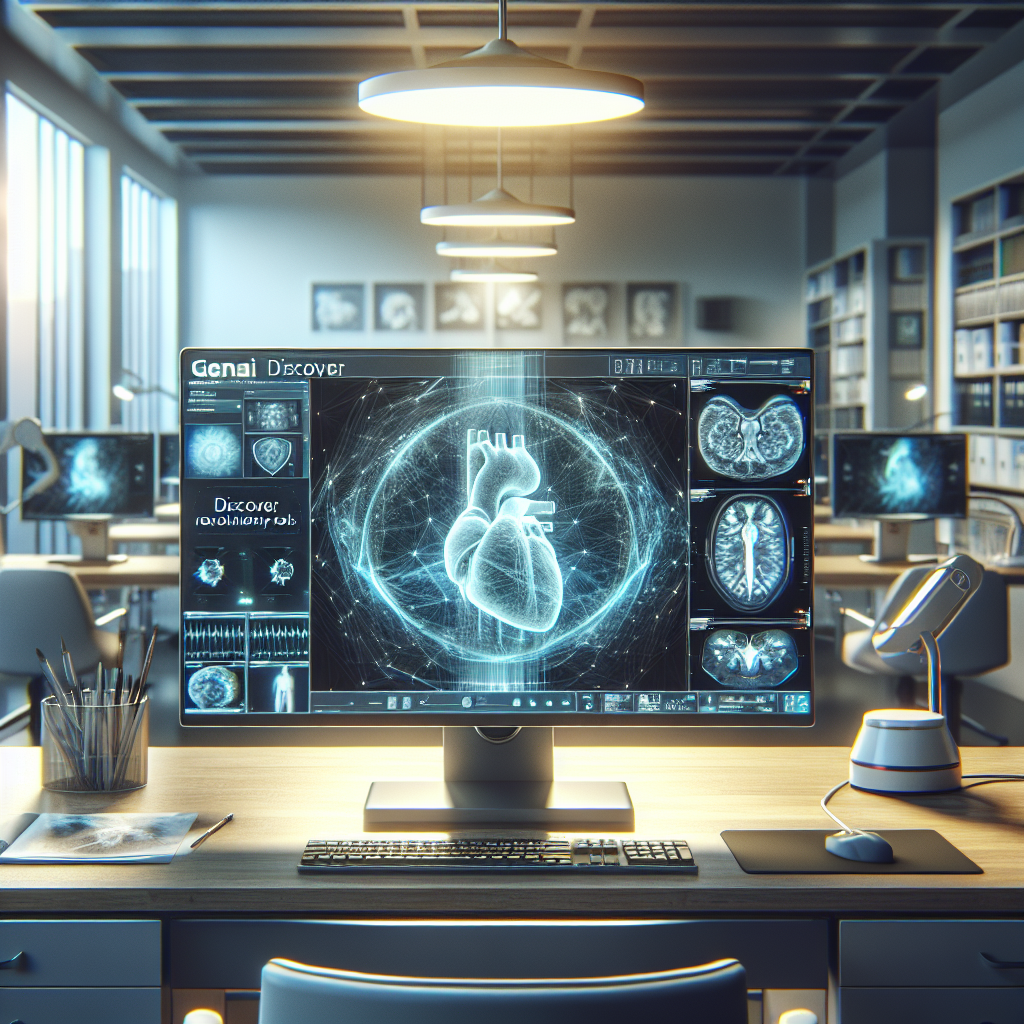
GenAI medical imaging involves the use of generative artificial intelligence to interpret and analyze medical images. This technology utilizes deep learning algorithms capable of recognizing patterns within complex datasets. It enhances image quality, identifies anomalies, and supports healthcare professionals in diagnostic processes.
The Role of Google Healthcare AI
Google has developed innovative AI-powered tools that are already making an impact in radiology and other medical imaging fields. These tools are designed to augment the capabilities of healthcare practitioners, providing precision and speed unmatched by traditional methods.
Why GenAI Medical Imaging Is Revolutionary
The integration of GenAI into medical imaging is a game-changer for several reasons:
– Accuracy: GenAI enhances the precision of image analysis, reducing the risk of human error.
– Efficiency: AI-driven tools can process vast amounts of data rapidly, speeding up diagnoses.
– Accessibility: Remote regions with limited access to medical professionals stand to benefit significantly from AI-based diagnostics.
Google Healthcare AI Tools in Action
1. AI-Powered Lung Cancer Screening
Google’s AI tools have been instrumental in improving lung cancer screening outcomes. Their deep learning algorithms analyze chest scans more effectively, identifying nodules with a high degree of accuracy. This feature facilitates early detection, significantly improving treatment success rates.
2. Diabetic Retinopathy Detection
Diabetic retinopathy, a leading cause of blindness, can now be detected early thanks to Google’s AI innovations. By analyzing retinal photographs, Google’s algorithms classify images based on the level of disease presence, allowing for timely interventions.
3. Cardiovascular Imaging
Google’s AI tools also assist in cardiovascular imaging by providing in-depth analysis of echocardiograms. The technology assesses heart health, detects anomalies, and aids in the crafting of personalized treatment plans.
Challenges and Considerations
While the benefits are substantial, the adoption of GenAI in medical imaging presents certain challenges:
– Data Privacy: Safeguarding patient data is a primary concern. Compliance with regulations like HIPAA is crucial.
– Integration: Aligning AI tools with existing medical systems requires careful planning.
– Reliability: Continuous refinement of AI models is needed to maintain consistency and reliability in results.
The Future of GenAI Medical Imaging with Google
The future is promising, as Google continues to refine its AI tools to support broader applications within medical imaging. Innovations such as 3D image reconstruction and real-time diagnostics are on the horizon. The eventual goal is to create a symbiotic relationship where human expertise and AI technology combine seamlessly to offer unparalleled healthcare solutions.
Conclusion
The emergence of GenAI medical imaging, particularly through game-changing tools developed by Google, is redefining how medical professionals approach diagnostics and patient care. By providing enhanced accuracy and efficiency, these technologies hold the potential to improve healthcare outcomes globally.
For those affected by ALS and the Real Water case, more insights can be accessed through a detailed reach-out at the alsrealwaterexposure.com contact page. You can also explore more related content on the alsrealwaterexposure.com blog page. For immediate assistance, call 702-385-6000.
References
– AI-Powered Medical Imaging
– Google Healthcare and AI
– The Impact of AI in Medical Imaging